Google Ads vs. Meta Ads for Chiropractors: Which Brings More New Patients?
Google Ads captures people already looking for a chiropractor. Meta Ads reaches people before they start searching. Here's how to decide where your next dollar goes.
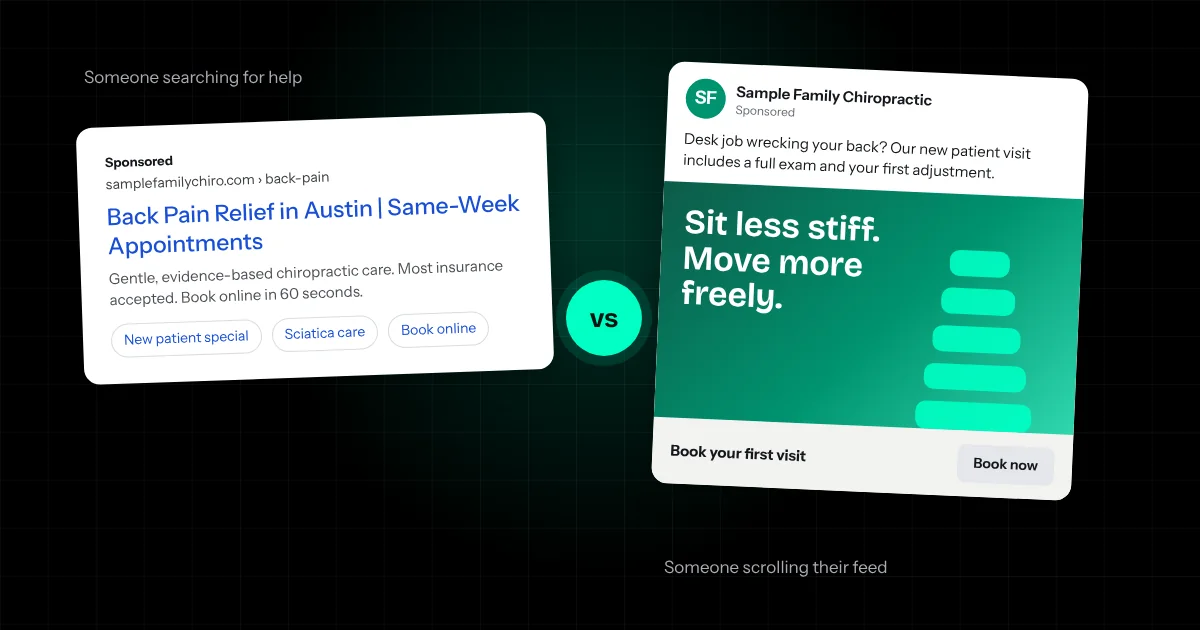
"Should we run Google Ads or Facebook ads?" is one of the first questions chiropractors ask us. The honest answer: they do different jobs. Once you understand the difference, the right mix for your practice gets much clearer.
Google Ads: catching people who are already looking
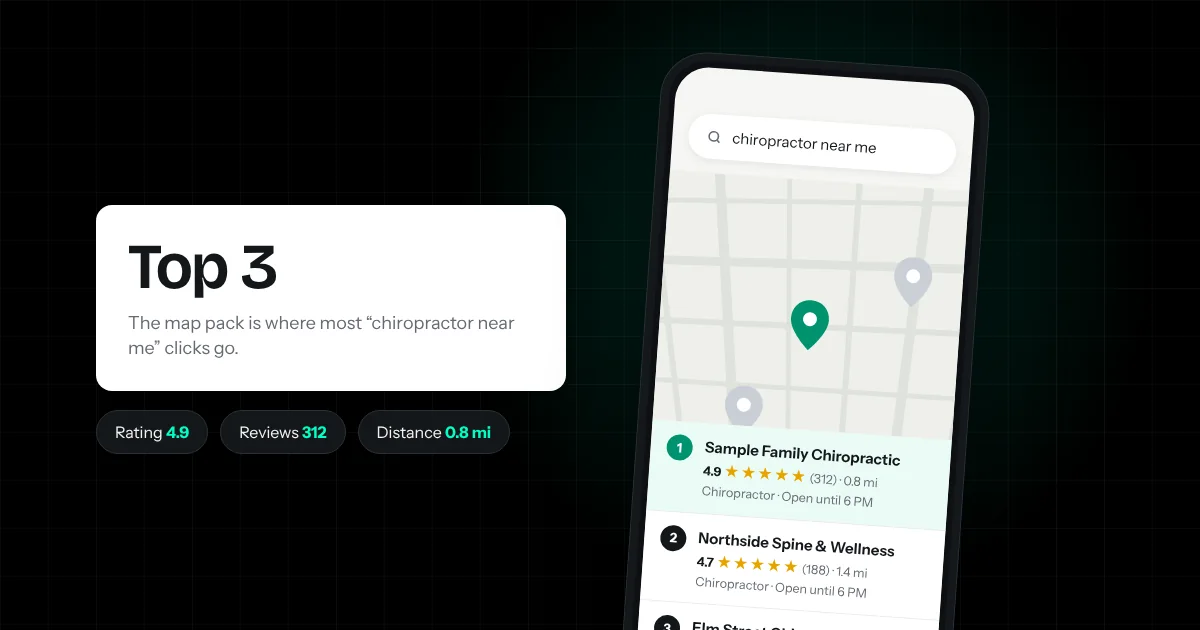
Google Ads shows your practice when someone searches for what you offer — "chiropractor near me", "lower back pain treatment", "sciatica relief". These people already have a problem and are actively looking for help.
Where Google Ads shines:
- High intent — searchers want care now
- Easy to control by location, time of day and keyword
- Calls and bookings often come in the first week of a campaign
Watch out for:
- Competitive markets can push up the cost per click
- Broad keywords waste budget on people looking for jobs, schools or free advice
- Without call and conversion tracking, you can't see which keywords bring patients
Meta Ads: reaching people before they search
Meta Ads (Facebook and Instagram) put your practice in front of people near your office while they scroll. Many of them have aches and pains but haven't started looking for a chiropractor yet.
Where Meta Ads shines:
- Large local reach at a lower cost per lead in many markets
- Great for new-patient offers, events and video that shows your personality
- Retargeting people who visited your website but didn't book
Watch out for:
- Lead quality varies more — some people sign up and never answer
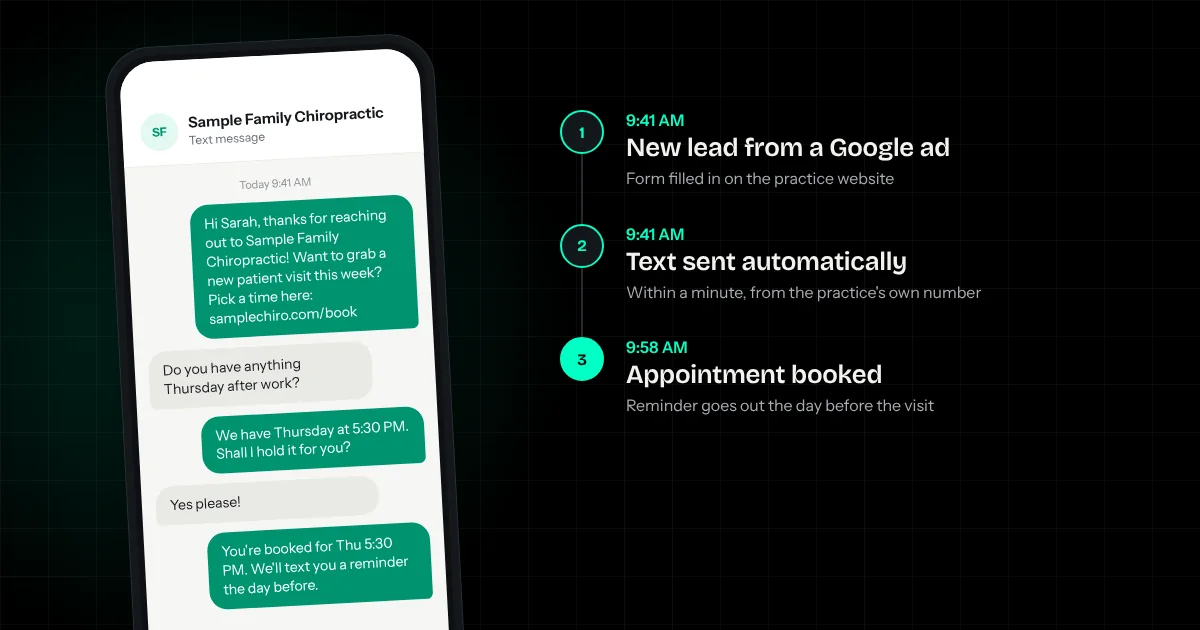
- Leads go cold fast, so follow-up speed matters even more
- Meta's ad rules don't allow copy that implies you know someone's health condition, so "Do you have back pain?" style headlines often get rejected — speak to the outcome instead
Compare them on the right number
Clicks and cost per lead are useful, but the number that matters is cost per new patient. A cheap lead that never books costs more than a pricier lead that shows up. To compare channels fairly you need:
- Call tracking, so you know which ads make the phone ring
- Conversion tracking on your website forms and online booking
- A CRM that tags every lead with its source and tracks whether they booked and showed
So which one should you start with?
For most practices we recommend this order:
- Start with Google Ads for high-intent searches in your area. It's the fastest way to fill gaps in your schedule.
- Add Meta Ads for new-patient offers and retargeting once tracking and follow-up are in place.
- Shift budget every month toward whichever channel delivers the lowest cost per new patient.
Your local competition, your offer and how quickly your team follows up all change the answer — which is why we build a plan per practice rather than a template.
Get a plan for your market
Our free practice report shows how your Google profile stacks up against nearby chiropractors, and we'll walk you through the channel mix that makes sense for your area. You can also read how we run Google Ads and Meta Ads for chiropractors.